
Published On
July 16, 2026
Authors
Senior Managing Director
Managing Director
Director
Manager
CMS’ Medicaid Work Requirements Rule: A 50-State Analysis of Additional Coverage Losses, FFY 2027–2034
Key Takeaways
- Beginning January 1, 2027, H.R. 1 makes Medicaid work requirements a condition of eligibility for adults in the Medicaid expansion group and expansion-like waiver programs. To keep coverage, these adults must show that they are working, volunteering, or attending school for at least 80 hours per month—or qualify for an exemption, such as pregnancy, caregiving for a young child, medical frailty, or substance use disorder treatment.
- CMS’ June 1 interim final rule (IFR) sets detailed state implementation requirements that, as written, take a narrower approach than H.R. 1’s plain language, including by limiting access to medical frailty exemptions and restricting self-attestation of compliance or exemption.
- The IFR is likely to increase coverage loss significantly beyond what would have occurred under a plain-language reading of the statute. As a result, the rule is already drawing legal challenges. On June 29, a coalition of 26 states CMS, asserting that the IFR goes beyond the statutory language adopted by Congress, departs from guidance provided to states repeatedly over the last year, and does not adequately inform states about their obligations.
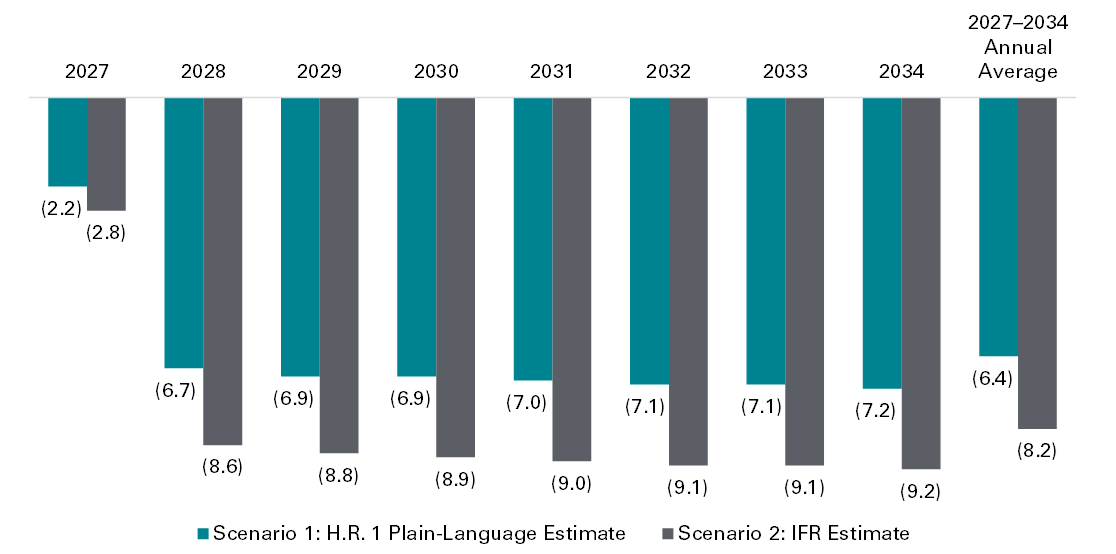
- Manatt Health estimates that the IFR implementation approach would increase average annual Medicaid coverage losses by 1.8 million people, from 6.4 million to 8.2 million between FFY 2027–2034—nearly 1 in 10 Medicaid enrollees nationwide. The estimate assumes a 40% coverage-loss rate among those subject to work requirements, informed largely by New Hampshire’s prior experience implementing work requirements. Coverage losses are projected to grow over time—from 2.8 million people in FFY 2027 to 9.2 million people by FFY 2034, when the requirements are fully implemented (see Figure 1).
Figure 1. Aggregate Change in Medicaid Enrollment from Baseline, FFYs 2027–2034 (millions)
This , a product of Manatt Health’s Vital Signs: 50-State Tracking, explains the key provisions in the IFR and Manatt Health’s assumptions that inform the projected increases in coverage loss, and estimates expected coverage loss by state and over time.
