
Millions Are Losing Health Coverage—Affordability Depends on Where You Live
Where States Step In, Coverage Loss is Mitigated: A 50-State Survey as eAPTCs Expire
In , tracking the impact of enhanced premium tax credits (eAPTCs), Manatt Health found four key crucial takeaways for states, providers and payors:
- Coverage affordability continues to plague Americans. The expiration of eAPTCs at the end of 2025 has led to the biggest reduction in Marketplace financial assistance since the Affordable Care Act (ACA)’s first open enrollment. Congress’ decision to let the tax credits expire immediately significantly increased how much millions of consumers must pay to stay covered.
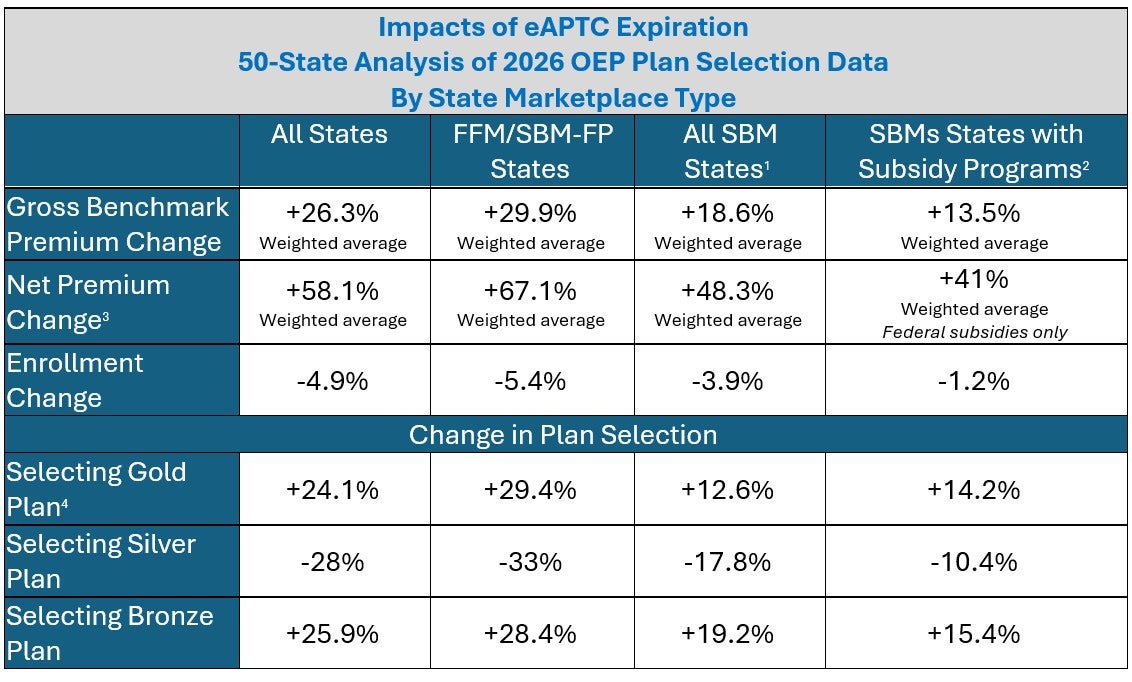
- This “affordability shock” translates into two trends: coverage loss and “buy-down”. During the 2026 Open Enrollment Period, premiums increased sharply and consumers shifted into less protective coverage. Marketplace plan selections fell by roughly 1.2 million nationally— a clear warning sign of coverage degradation even among those who hope to remain enrolled.
- Where you live matters more than ever. The biggest premium spikes, plan switching, and enrollment declines occurred in states using Healthcare.gov and in states without supplemental support—while State-Based Marketplaces and especially states with their own subsidy programs saw smaller premium increases and far greater enrollment stability.
- The worst effects are likely still ahead. Plan selection data are only the first read; many consumers will drop coverage later due to premium non-payment and budget strain. Effectuated enrollment, risk pool changes, and the durability of state subsidy programs will determine whether 2026 is a manageable transition—or the start of a longer erosion in Marketplace coverage.
Overview:
Click to read the full report and impact for each state.
About this Analysis
This looks at 2026 Open Enrollment Period (OEP) released by the Center for Medicare & Medicaid Services (CMS). These data provide an early indicator of how consumers are responding to the expiration of eAPTC in 2026, after Congress failed to extend the enhanced subsidies. The analysis uses 50-state survey data to analyze national experience and compare outcomes across states, grouping them into categories according to Marketplace type and state policy actions to determine the impact of eAPTC expiration nationally and note trends in comparisons across states.
About Vital Signs 50-State Tracking
H.R. 1 and other federal actions are driving historic health care cuts. Manatt Health is tracking state responses and analyzing the effects on coverage, affordability, and system stability. Vital Signs helps stakeholders understand near- and long-term impacts to inform policy, accountability, and collaboration.
